
Protect, restore, and strengthen damaged teeth with custom-fitted crowns built for lasting comfort and a natural smile.
Durable, natural-looking dental crowns that repair damaged or weakened teeth while restoring full chewing function and confident smiles.
A dental crown is a custom-made cap that fits over an entire tooth, down to the gumline, covering and protecting a tooth that has been compromised by decay, injury, or a previous large filling. Unlike a filling, which fills in a portion of a tooth, a crown encases the visible structure completely, giving it back the shape, size, and strength it had before damage occurred. At Urban Dental Studio, we rely on precise digital impressions, high-grade materials, and careful shade matching to make sure your crown blends seamlessly with your surrounding teeth.
Crowns are among the most versatile restorations in modern dentistry. They can rescue a tooth from extraction, anchor a bridge, cap a dental implant, or simply reinforce a tooth that has become brittle after root canal therapy. Whatever the reason, our goal is always the same: give you back a tooth you can bite, chew, and smile with confidently, without worrying about it failing under everyday pressure.
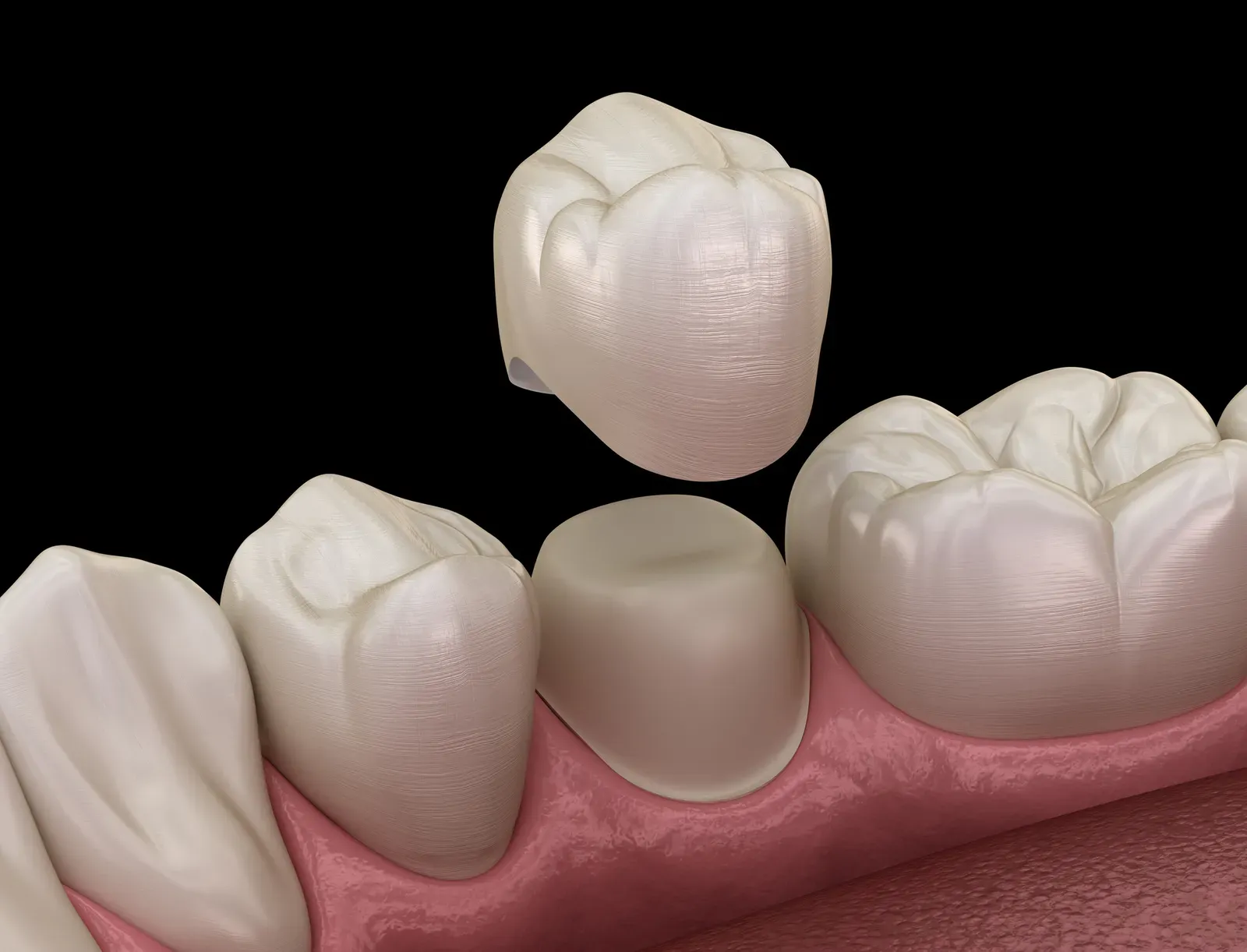
Teeth rarely fail without warning. Most patients who end up needing a crown have noticed one or more symptoms for weeks or months before scheduling an appointment. Recognizing these signs early can mean the difference between a straightforward crown procedure and a more complex, costly repair down the road. During your exam, our dentists will evaluate the extent of damage with digital X-rays and a close clinical inspection to determine whether a crown is the right solution.
Most adults with a compromised but salvageable tooth are candidates for a crown, but every case is unique. Before recommending treatment, our team examines the health of the surrounding gum tissue, the amount of remaining natural tooth structure, and your overall bite alignment. We also factor in your personal goals, whether that means matching the exact shade of your smile or choosing a stronger material for back teeth that handle heavier chewing forces.
Not every tooth needs the same type of crown. The right material depends on the tooth's location, the forces it absorbs when you chew, and how visible it is when you smile or speak. We walk through the pros and cons of each option during your consultation so you can make a decision that fits your budget, aesthetic goals, and long-term dental health.
A well-fitted crown does far more than cover a problem tooth. It restores the mechanics of your bite, prevents further deterioration, and often eliminates discomfort you may have grown used to living with. Patients are frequently surprised at how much more comfortable eating becomes once a weakened tooth has been properly reinforced.
Once your permanent crown is cemented into place, it behaves much like a natural tooth and requires the same everyday care, plus a few extra precautions in the first couple of weeks while your gum tissue settles. Following these guidelines helps your crown last as long as possible and keeps the tooth underneath it healthy for years to come.
We examine the damaged tooth, take digital X-rays if needed, and discuss which crown material best suits its location and your goals.
We gently numb the area and reshape the tooth, removing decay or damaged structure so the crown can fit snugly over what remains.
Using a digital scanner, we capture a precise impression of your prepared tooth and bite, sent directly to the lab for fabrication.
While your permanent crown is crafted, we place a comfortable temporary crown so you can eat and speak normally in the meantime.
At your follow-up visit, we check the shape, color, and bite of your new crown, make any needed adjustments, and permanently bond it in place.
We confirm your bite feels natural and comfortable, and we go over aftercare tips so your new crown stays in top shape for years to come.
Choosing where to have a crown placed matters just as much as choosing to get one. The fit, the shade match, and the way the crown feels against your bite all depend on the skill and care behind the work. Here's what sets our approach apart.
A traditional crown usually takes two visits over one to two weeks, with the first visit for tooth preparation and impressions and the second for placing the permanent crown. In select cases, we can design and mill a same-day crown in a single appointment.
We numb the area thoroughly before preparing the tooth, so most patients feel only mild pressure during the procedure. Some tenderness or sensitivity around the gum line for a day or two afterward is normal and typically resolves quickly.
With good oral hygiene and regular dental visits, most crowns last 10 to 15 years, and many last significantly longer. Lifespan depends on the material chosen, your bite habits, and how consistently you keep up with checkups.
Yes. We take careful shade measurements before fabrication and work closely with our lab to match the color, translucency, and surface texture of your surrounding natural teeth as closely as possible.
While uncommon, crowns can occasionally loosen due to decay underneath, cement breakdown over time, or biting on something unusually hard. If your crown feels loose, chipped, or falls out, contact us right away so we can re-cement or replace it promptly.
Many dental insurance plans provide partial coverage for crowns when they are medically necessary rather than purely cosmetic. Our front office team will help verify your benefits and walk you through costs before treatment begins.
Join our family of satisfied patients with personalized dental solutions.

 (240) 512-1571