Common Dental Problems Clarksburg Residents Face and How to Prevent Them
Clarksburg has changed a lot over the past two decades. What was once a quiet stretch of Montgomery County farmland is now one of Maryland’s fastest-growing communities – a mix of young families, working professionals, and longtime residents who’ve watched the area transform around them. With that growth has come more access to services, better infrastructure, and a stronger sense of neighborhood. But one thing hasn’t changed: oral health problems remain quietly common, and most of them are preventable.
The most persistent dental issues don’t usually announce themselves loudly. They build gradually – a little sensitivity here, a gum that bleeds occasionally, a tooth that’s been “a bit tender” for longer than you’d like to admit. By the time something becomes obviously wrong, the problem has often been developing for months.
This blog covers the dental problems that most often occur in our community, what causes them, and, more importantly, how to stay ahead of them.
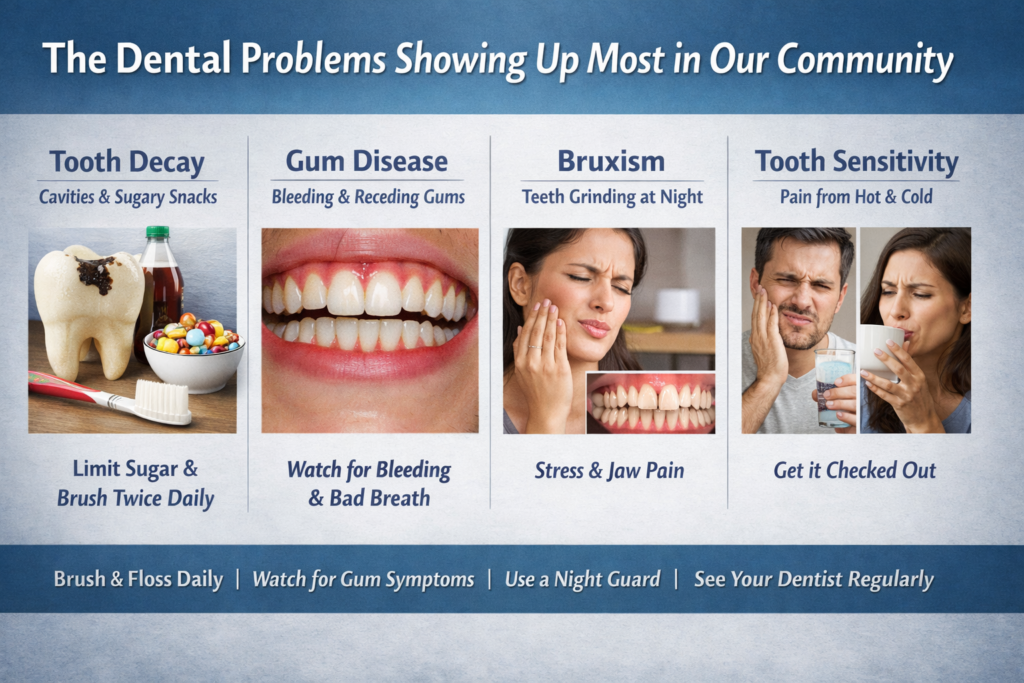
The Dental Problems Showing Up Most in Our Community
Every community has its own patterns when it comes to health. For the families and individuals in Clarksburg, a handful of conditions come up in discussion time and again. These aren’t rare or unusual; they’re the kinds of problems that affect people across every age group, from kids in their first years of school to adults deep into middle age.
Tooth Decay: Still the Most Widespread Dental Disease
Tooth decay or dental caries remains the most common chronic disease among both children and adults in the United States, according to the CDC. In Clarksburg, where busy schedules are the norm and grab-and-go eating is common, the dietary habits that fuel decay are easy to fall into. Sugary drinks, frequent snacking, and not brushing before bed are the main culprits.
What makes decay so deceptive is that it’s painless until it isn’t. By the time a tooth starts aching, the decay has usually reached deeper layers. Catching it early during a routine exam means a simple filling instead of a root canal or crown. That’s a significant difference in both treatment time and complexity.
To lower your risk meaningfully, focus on these habits:
- Brush twice daily with fluoride toothpaste, and don’t skip the last brush before bed
- Floss once a day — decay between teeth (interproximal decay) accounts for a large share of cavities in adults
- Limit sugary and acidic beverages, especially between meals when saliva production is lower
- Ask your Clarksburg dentist about dental sealants if you or your child has deep grooves in the back teeth
Gum Disease: The Condition Most Adults Don’t Know They Have
The CDC estimates that nearly half of American adults aged 30 and older have some form of periodontal (gum) disease. Early-stage gum disease, called gingivitis, is reversible, but it rarely causes pain, which means most people don’t realize it’s happening. Left unchecked, it progresses to periodontitis, a more serious infection that can lead to bone loss and, eventually, tooth loss.
For Clarksburg residents managing high-stress careers, raising young families, or both, oral hygiene routines often get deprioritized. Stress itself is a contributing factor — it elevates cortisol levels, which can suppress immune response and make gum tissue more vulnerable to bacterial infection. Research published in the Journal of Periodontology has found a consistent link between chronic stress and higher rates of periodontal disease.
Warning signs worth paying attention to: bleeding gums when you brush, persistent bad breath, gum recession, or teeth that feel slightly looser than they used to. Any of these deserves a checkup, not a “wait and see” approach.
Bruxism: The Sleep Problem That Damages Teeth
Bruxism — grinding or clenching the teeth, usually during sleep — is more common than most people realize, and significantly more common in populations dealing with elevated stress. The American Sleep Association estimates that roughly 10% of adults and up to 15% of adolescents grind their teeth regularly. In a high-stress environment, that number is likely to skew toward the higher end of the range.
The physical toll accumulates quietly. Over months and years, bruxism wears down enamel, flattens tooth surfaces, and causes microfractures. It’s also a common driver of jaw pain, frequent morning headaches, and TMJ (temporomandibular joint) discomfort. A custom night guard, fitted by your dentist, is one of the most effective ways to protect your teeth from ongoing damage.
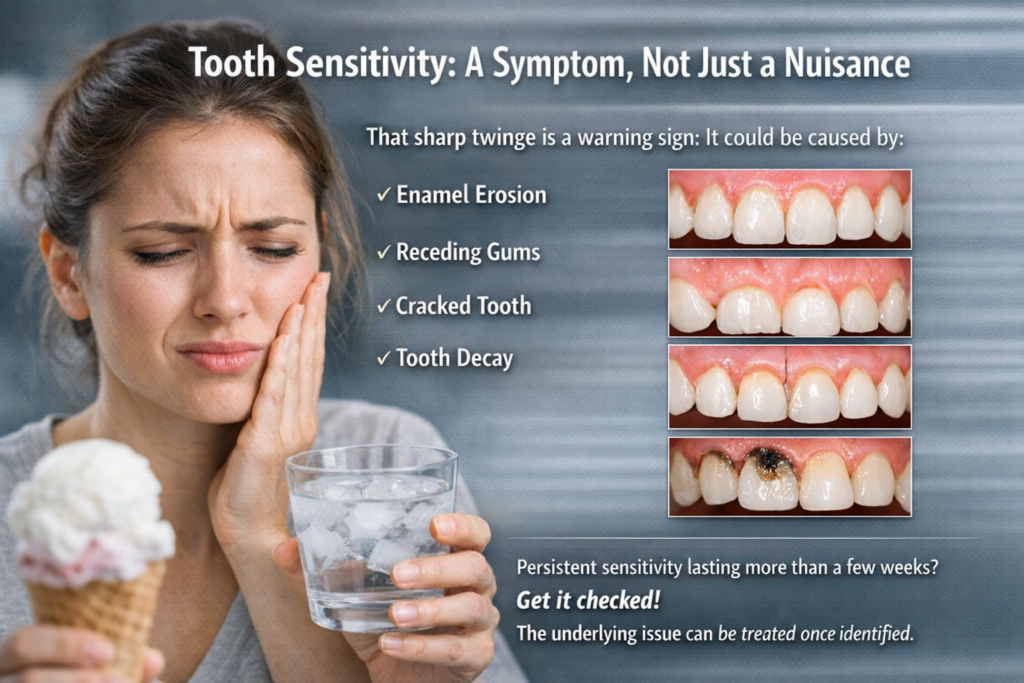
Tooth Sensitivity: A Symptom, Not Just a Nuisance
A sharp twinge when you sip ice water or bite into something cold is easy to dismiss as “just how your teeth are.” But sensitivity is usually a sign that something specific is happening: enamel erosion, gum recession, a small crack, or early-stage decay. Treating it as a standalone symptom with a sensitive toothpaste can mask the signal while the underlying issue worsens.
If you’ve had persistent sensitivity for more than a few weeks, it’s worth getting it evaluated. The fix is often straightforward once the cause is identified.
Prevention Looks Different When Life Is Busy
Clarksburg sits along the I-270 corridor, one of the most congested commuting routes in the state. Many residents spend significant time in the car each day, rely heavily on packaged convenience foods, and find that self-care, including dental care, gets squeezed out by competing priorities.
That context matters. Prevention strategies that work for people with flexible schedules and low-stress routines don’t always translate directly to a packed suburban lifestyle. The most practical preventive dental care for most Clarksburg families comes down to three things: consistent home hygiene (brush and floss daily, no exceptions), smart food and beverage choices (water over soda, limit nighttime snacking), and regular professional cleanings twice a year.
Those professional visits do something home care can’t — remove calculus (hardened plaque that brushing won’t touch), catch early-stage problems before they become treatment-requiring issues, and give your dentist a chance to assess changes in your oral health over time. Skipping them is one of the most common ways preventable problems become expensive ones.
Staying Ahead of Problems at Urban Dental Studio
Urban Dental Studio serves the Clarksburg community, focusing on accessible, thorough preventive care. Appointments are designed to be efficient without being rushed because a good exam takes time, and patients deserve explanations, not just procedures.
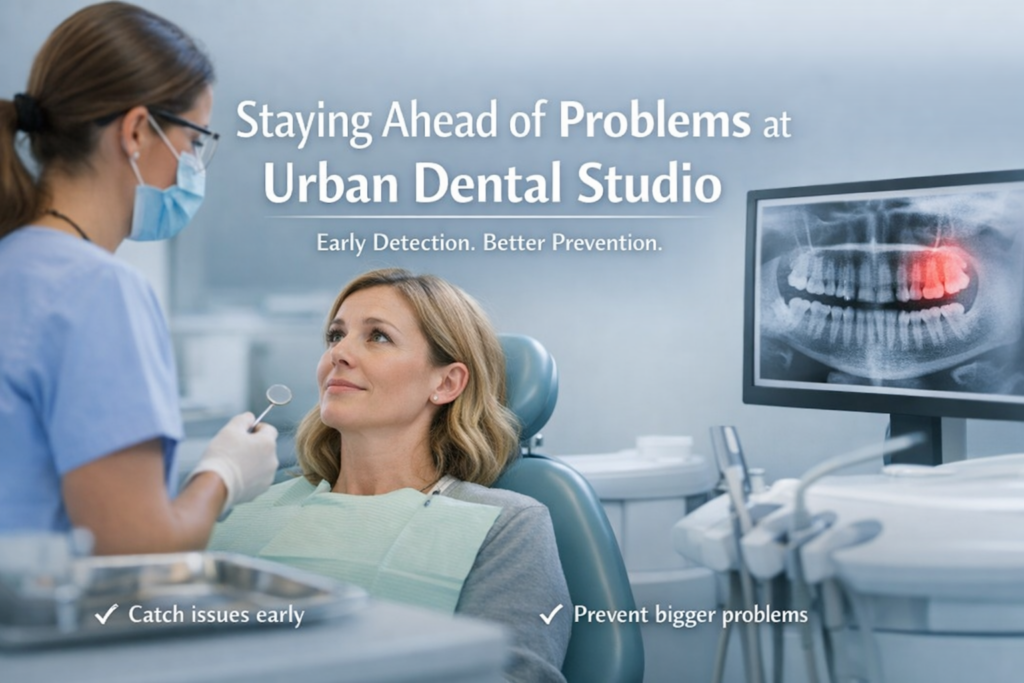
Whether you’re due for a routine cleaning, dealing with sensitivity you’ve been ignoring, or concerned about a tooth that’s been bothering you, the right step is a thorough evaluation. Most dental problems are far easier to address early. The ones that get ignored have a way of becoming genuinely complicated.
Don’t Let Small Problems Become Big Ones
Most of the dental issues covered here, like cavities, gum disease, grinding damage, and sensitivity, are manageable when caught early. They become more complicated, time-consuming, and extensive when left alone. Clarksburg residents dealing with any of these concerns deserve straightforward answers and a clear treatment plan.
Urban Dental Studio is here for exactly that. Call us today or book online to schedule your next visit. Your mouth will thank you, and so will your future self.
People Also Ask About Common Dental Problems
Fluoride strengthens tooth enamel by integrating into the enamel’s mineral structure, making it more resistant to acid attacks from bacteria. It also helps remineralize weakened areas of enamel before full cavities form. Professional fluoride treatments at your dental visit deliver a higher concentration than what’s found in most toothpastes, which is why they’re particularly useful for patients at elevated cavity risk.
Yes, and the evidence is substantial. Research has established links between periodontal disease and systemic conditions, including cardiovascular disease, type 2 diabetes, and adverse pregnancy outcomes. The mechanism is thought to involve chronic inflammation and the spread of bacteria from the gum tissue into the bloodstream. Treating gum disease doesn’t just protect your teeth – it may also have broader health implications.
Yes. Children are actually at higher risk for cavities than most adults because their enamel is thinner and their brushing technique isn’t yet refined. Twice-yearly visits for kids allow the dentist to monitor tooth development, apply sealants to incoming permanent molars if appropriate, and catch early signs of decay before they affect developing teeth.
Dry mouth (xerostomia) is a genuine dental risk factor. Saliva plays a critical role in neutralizing acids and washing food particles off teeth. Without adequate saliva flow, the environment in your mouth becomes significantly more favorable to bacterial growth and decay. Dry mouth is a common side effect of many medications, including antihistamines, antidepressants, and blood pressure medications. If you’re experiencing it regularly, mention it to your dentist.
A standard prophylaxis (routine cleaning) removes plaque and tartar from above and just below the gumline in patients with healthy gums. A deep cleaning or scaling and root planing, is a more involved treatment used when gum disease has caused the gums to pull away from the teeth, creating pockets where bacteria accumulate. It’s performed in sections of the mouth, often with local anesthesia, and typically requires a follow-up visit to assess healing.