
Wisdom teeth extraction is one of the most common oral surgery procedures performed on teenagers and adults, and at Urban Dental Studio we treat it with the same precision, comfort, and care we bring to every service in our practice. Your third molars, commonly called wisdom teeth, typically emerge between the ages of 17 and 25 - but because most jaws simply don't have enough room to accommodate them, they frequently become impacted, misaligned, or partially erupted, creating a cascade of problems that range from mild discomfort to serious infection.
Wisdom teeth, or third molars, are the last set of teeth to develop, typically emerging between the ages of 17 and 25. For many people, there simply isn't enough room in the jaw to accommodate them properly, which leads to impaction, crowding, infection, or pressure on neighboring teeth. At Urban Dental Studio, we evaluate every patient's jaw structure, tooth position, and dental history before recommending extraction, so you understand exactly why removal is the right choice for your situation.
Left untreated, problematic wisdom teeth rarely resolve on their own. They can shift adjacent teeth out of alignment, trap food and bacteria beneath the gumline, and in some cases lead to cyst formation around an impacted tooth. Removing them at the right time-often before symptoms become severe-is one of the most proactive steps you can take to protect your bite, your gum health, and the years of orthodontic or restorative work you may have already invested in.
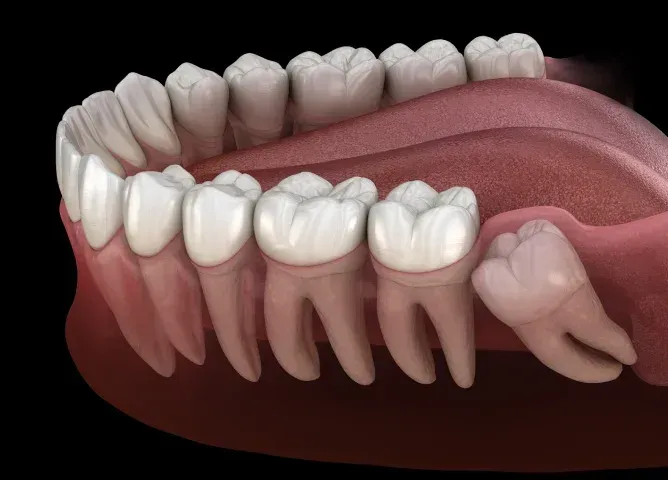
Not every set of wisdom teeth causes trouble, but many do-and the warning signs are often easy to dismiss as temporary discomfort. Recognizing these symptoms early allows us to intervene before an impacted or infected tooth causes more serious damage to your jaw, gums, or surrounding teeth. If any of the following sound familiar, it's worth scheduling an evaluation.
Deciding whether to remove a wisdom tooth isn't a one-size-fits-all answer. We look closely at x-rays, the angle and depth of each tooth, and how much room your jaw actually has before recommending extraction. Some patients benefit from removal in their late teens as a preventive measure, while others may need it later after symptoms develop or during preparation for orthodontic treatment.
Our evaluation considers your overall oral health, the position of nerves near the extraction site, and whether the tooth has fully or partially erupted. This personalized approach ensures we recommend extraction only when it genuinely benefits your long-term dental health-not as a default procedure.
Every wisdom tooth presents a different challenge, so we tailor our surgical approach to the specific position, depth, and root structure revealed in your diagnostic imaging. Simple extractions and surgical extractions require different techniques, instruments, and healing timelines, and we walk you through exactly what your case requires before any treatment begins.
Most patients recover from wisdom teeth extraction within three to seven days, though full healing of the underlying bone and gum tissue continues for several weeks. We give every patient detailed, written aftercare instructions tailored to their specific extraction, plus a direct line to our office if questions come up during recovery. Following these guidelines closely is the single biggest factor in avoiding complications like dry socket or prolonged swelling.
Beyond the recovery window, removing problematic wisdom teeth pays off for years. Patients consistently report easier brushing and flossing in the back of the mouth, fewer gum infections, and reduced risk of the crowding or bite shifts that third molars so often cause. It's an investment in the stability of your entire smile, not just relief from a single aching tooth.
We start with a thorough exam and digital x-rays or 3D imaging to assess the position, depth, and angle of each wisdom tooth, then discuss your options in plain language.
Based on your imaging and health history, we recommend the right anesthesia or sedation option and walk you through what to expect before, during, and after surgery.
Once numb and comfortable, we carefully remove each tooth using the gentlest technique appropriate to its position-simple or surgical-minimizing trauma to surrounding tissue.
Before you leave, we review detailed aftercare steps, schedule a follow-up if needed, and make sure you have our direct contact for any questions during recovery.
Removing wisdom teeth requires precision, honest communication, and genuine attentiveness to your comfort before, during, and after the procedure. Here's what sets our approach apart.
No. We numb the extraction site thoroughly with local anesthesia, and sedation options are available for added comfort. Most patients feel only pressure, not pain, during the actual procedure.
Most patients feel significantly better within three to five days, with full soft tissue healing typically complete within one to two weeks. Complex surgical extractions may take slightly longer.
Not necessarily. Some wisdom teeth erupt fully and function normally without issue. We evaluate x-rays and positioning to determine whether removal is genuinely necessary or if monitoring is sufficient.
Yes, many patients choose to have all four removed in a single visit to minimize total recovery time and reduce the number of appointments needed.
Avoid crunchy, hard, spicy, or seed-containing foods for the first week, along with straws, which can dislodge the healing clot. Stick with soft foods like soup, yogurt, and smoothies.
Sedation isn't always required, especially for simple extractions, but it's a comfortable option for anxious patients or those having multiple impacted teeth removed in one visit.
Join our family of satisfied patients with personalized dental solutions.


 (240) 512-1571