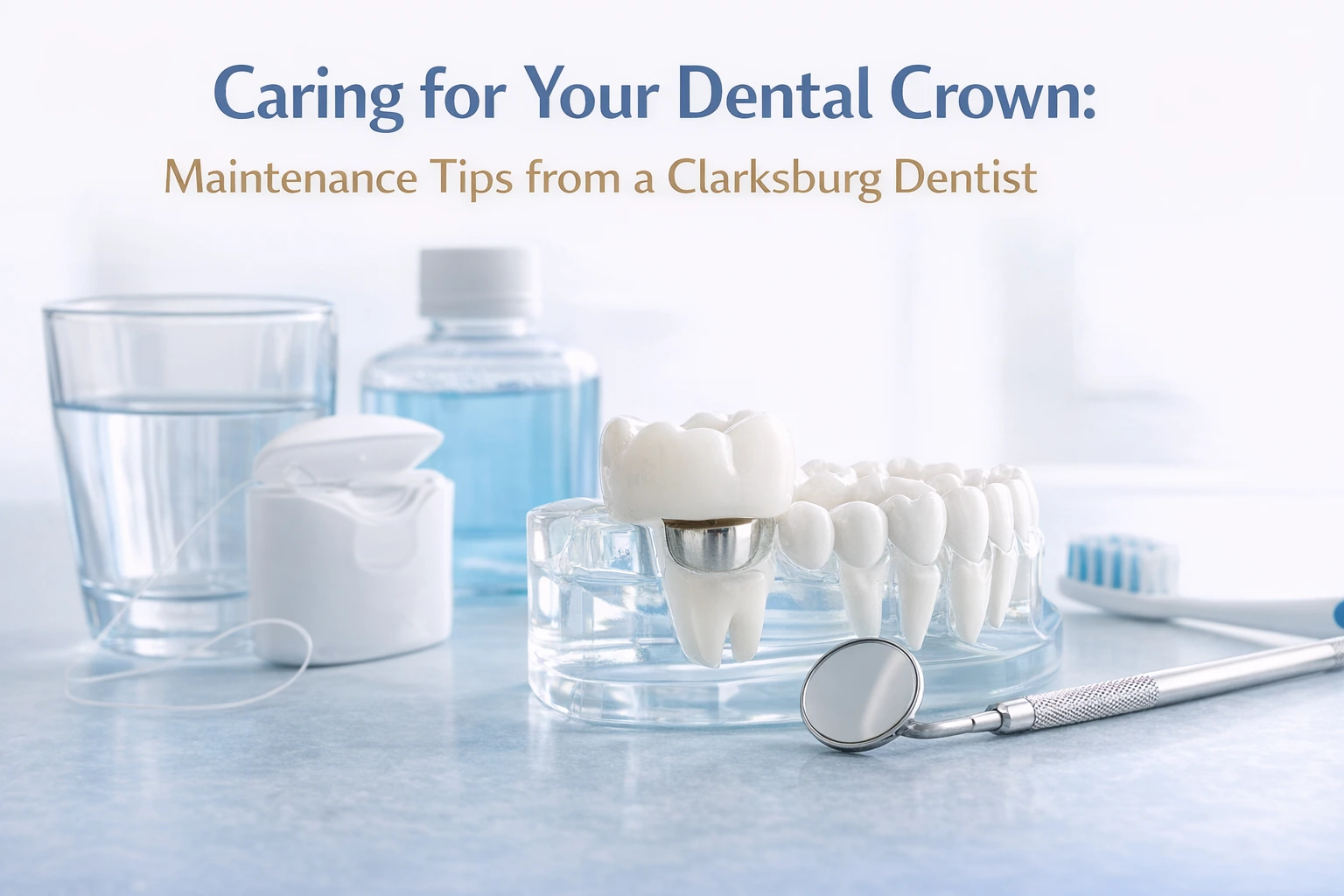
Caring for Your Dental Crown: Maintenance Tips from a Clarksburg Dentist
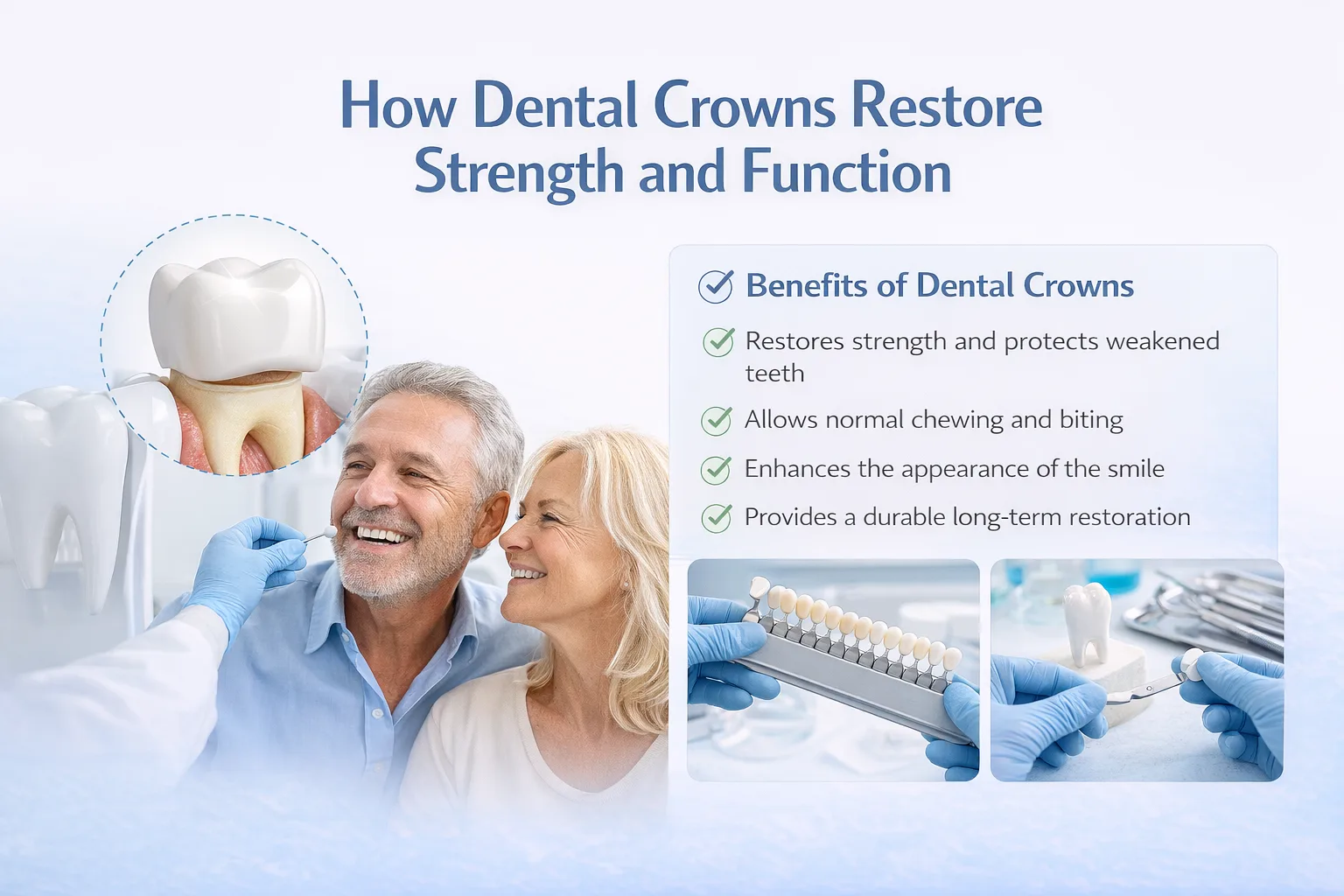
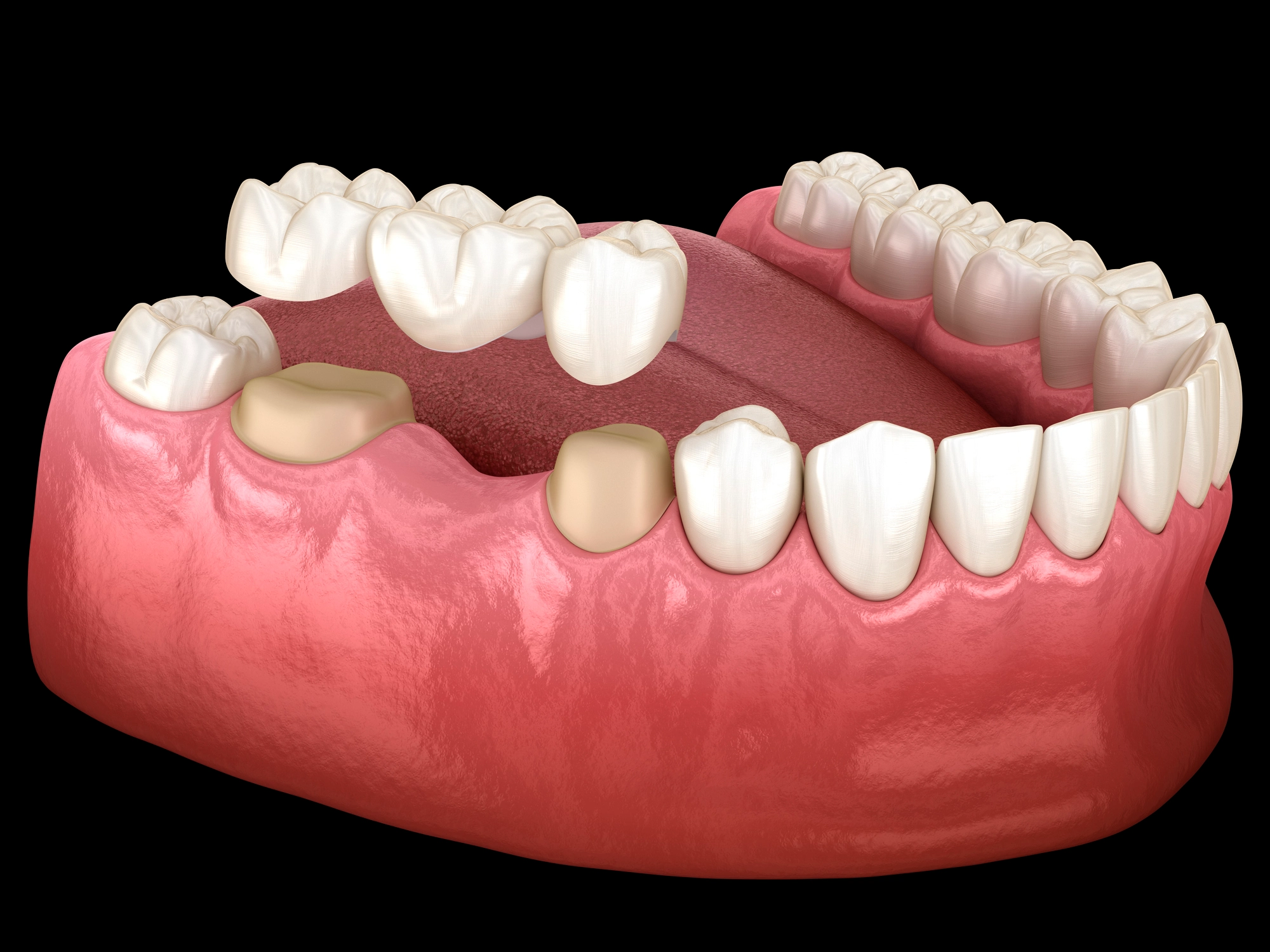
A dental crown is one of the most reliable solutions in modern restorative dentistry. It completely covers a weakened, cracked, or heavily restored tooth, restoring its shape, strength, and function. Get one placed well, and it can serve you for fifteen years or longer. But how long a crown actually lasts depends a lot on how you treat it, and most patients aren’t told nearly enough about that.
This guide covers the maintenance habits that genuinely make a difference. Not the generic “brush and floss” advice you’ve heard a hundred times, but the specific things that affect crown longevity — what to eat, what to avoid, how to clean around a crown properly, and what warning signs are worth paying attention to.
Whether you just had a procedure done or you’ve had a crown for a few years and want to make sure you’re doing right by it, you’ll find something useful here.
What You’re Actually Protecting When You Care for a Crown
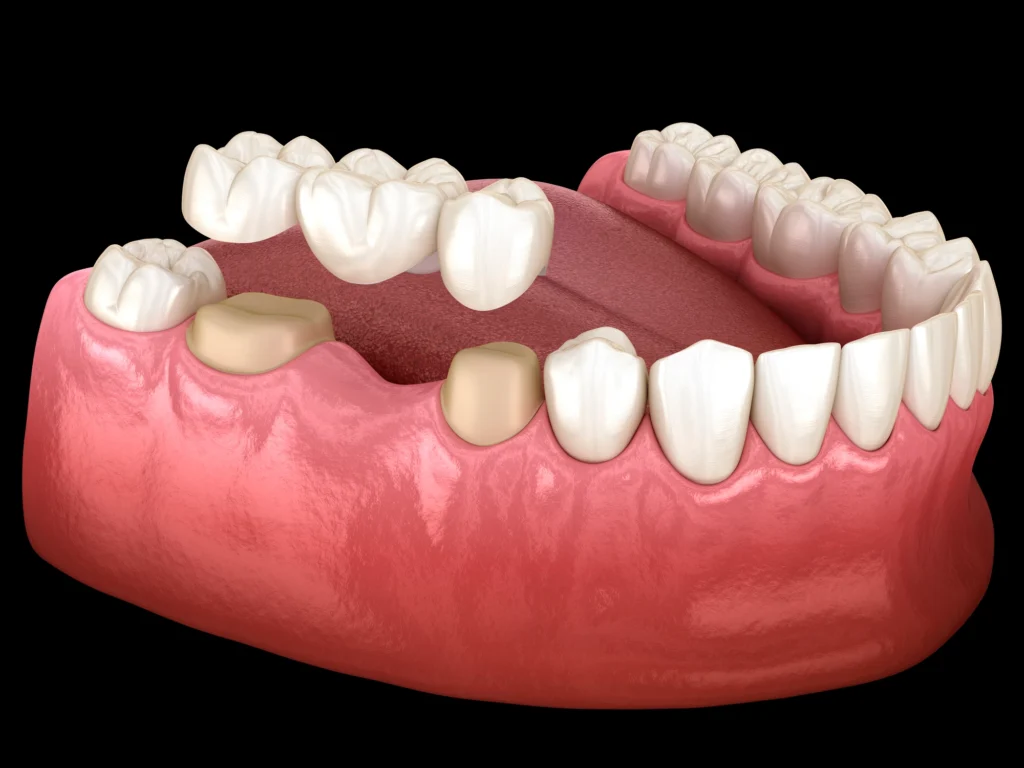
Patients who come in for dental crowns in Clarksburg, MD, are often surprised to learn that the crown itself isn’t what needs the most protection — the tooth underneath it is. A crowned tooth still has a root, still has living tissue in many cases, and is still connected to the surrounding gum and bone. The margin where the crown meets the gumline is particularly vulnerable: that’s where bacteria can sneak in if oral hygiene slips, and that’s where most crown-related problems begin.
The crown material itself — whether ceramic, zirconia, porcelain-fused-to-metal, or full gold — is highly durable. But durable doesn’t mean indestructible. Porcelain can chip under enough force. The cement that holds a crown in place can weaken over time, especially when repeatedly stressed. And even the most well-crafted crown will fail prematurely if the tooth or the gum tissue around it isn’t properly maintained.
The good news: most of this is within your control. Here’s what to focus on.
Daily Cleaning Habits That Protect Your Crown and the Tooth Beneath It
Brushing: Technique Matters More Than You Think
Brush twice daily with a soft-bristle toothbrush. That part you probably know. But with a crown, pay extra attention to the gumline around the restoration — that margin is where plaque accumulates and where decay can develop on the underlying tooth structure if cleaning is inconsistent. Angle the bristles slightly toward the gumline and use gentle, circular strokes rather than aggressive horizontal scrubbing, which can actually stress the marginal seal over time.
Fluoride toothpaste is worth sticking with. Even though the crown itself can’t decay, the tooth root and any exposed natural tooth at the margin can. Fluoride helps protect those areas.
Flossing Around a Crown: Do It Right or Skip the Benefits
Flossing between a crowned tooth and its neighbors is essential — but the technique is slightly different than standard flossing. Slide the floss in gently rather than snapping it down, and when you pull it out, draw it to the side rather than pulling straight up. Pulling straight up can, over time, affect the cement seal at the margin.
If traditional floss feels tricky around your crown, a water flosser (oral irrigator) is an excellent alternative. Research published in the Journal of Clinical Dentistry found that water flossers remove significantly more plaque from the gumline than string floss alone, particularly around restorations and fixed dental work.
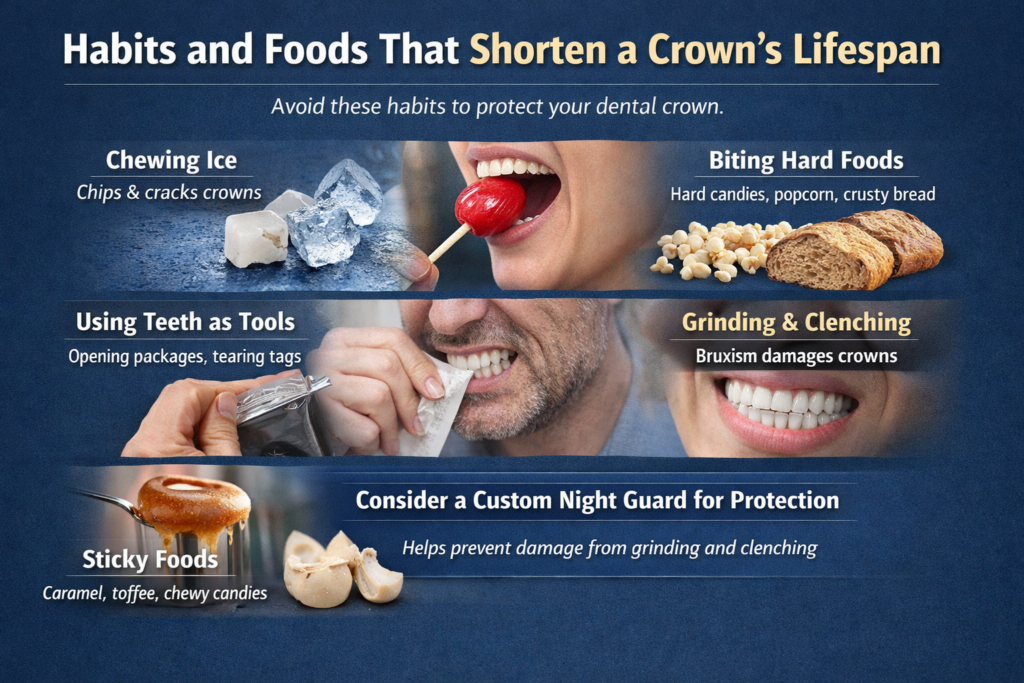
Habits and Foods That Shorten a Crown’s Lifespan
This is the section most patients wish they’d read earlier. A number of common, everyday habits put dental crowns under disproportionate stress — and they’re worth knowing about before something goes wrong, not after.
The habits most likely to cause crown damage or dislodgement:
- Chewing ice — this is one of the most common causes of crown chipping and cracking, particularly with ceramic and porcelain restorations
- Biting into hard foods (hard candies, unpopped popcorn kernels, hard crusty bread) directly on the crown
- Using teeth as tools — opening packaging, tearing tags, holding objects — all of which apply uneven lateral force
- Grinding or clenching (bruxism), which gradually wears down crown material and can loosen the cement over time
- Chewing very sticky foods like caramel, toffee, or certain chewy candies, which can pull on a crown and weaken the bond
If you grind your teeth at night, a custom night guard is worth discussing with your dentist. It’s one of the most protective measures you can take for any dental restoration, including crowns.
Warning Signs That Mean It’s Time to Call Your Dentist
Crowns don’t usually fail dramatically. The signs that something is off tend to be subtle at first, which is exactly why they’re easy to dismiss. Pay attention to the following — and don’t wait too long to have them evaluated.
- Sensitivity to temperature that wasn’t there before, especially if it lingers after the hot or cold source is removed
- A feeling that your bite has shifted or that the crown sits higher than it used to
- Any visible crack, chip, or rough edge on the crown surface
- Pain or tenderness around the crowned tooth, particularly when biting
- The crown feels slightly loose or moves when you press on it
- Persistent bad taste or odor near the crown, which can signal bacterial buildup beneath the margin
None of these is panic-worthy on its own, but all of them are worth a phone call. A small issue caught early is almost always easier to fix than one that’s been quietly worsening for months.
Why Regular Checkups Matter Even More After Crown Placement
Routine dental visits — typically every six months — take on added importance once you have a crown. Your dentist will check the integrity of the margin, assess the crown’s fit, look for signs of decay at the gumline, and evaluate the surrounding teeth and gum tissue. Periodic X-rays can also reveal what’s happening at the root level, beneath the crown, where visual inspection alone can’t reach.
Professional cleanings also matter for crowned teeth. Polishing removes stain and plaque from the crown surface and surrounding area, and scaling clears away any calculus that’s built up at the gumline — the kind of buildup that home care simply can’t address.
Urban Dental Studio sees plenty of patients across Clarksburg and the surrounding Montgomery County area who’ve had dental crowns placed elsewhere and simply want a trusted local dentist to maintain them. That’s entirely welcome — continuity of care is what helps crowns last.
Your Crown Is an Investment — Protect It
A well-done dental crown is one of the most durable solutions in restorative dentistry. But even the best crown requires the right care to reach its full lifespan. The habits covered here — careful cleaning at the margin, avoiding high-stress foods and behaviors, watching for early warning signs — are what separate a crown that lasts a decade from one that lasts two.
If you have questions about your crown, want a checkup, or are considering a new restoration, Urban Dental Studio is ready to help. Call us today or book your appointment online at urbandentalstudio.com. Taking care of it now is always easier than fixing a problem later.
People Also Ask
Yes. The crown itself cannot decay, but the natural tooth structure at and below the gumline can. This is particularly true at the margin — the edge where the crown meets the tooth. If plaque accumulates there consistently, bacteria can work their way under the crown over time and cause decay in the underlying tooth. Regular cleaning of that area is the main defense.
With proper care, most crowns last 10 to 15 years. Many last considerably longer. The material plays a role — zirconia and full-gold crowns tend to be the most durable — but daily habits matter just as much. Patients who avoid high-risk habits (grinding, chewing ice, biting hard objects) and maintain consistent oral hygiene can expect 15 to 20 years of service from a well-placed crown.
Call your dentist as soon as possible — don’t leave the tooth unprotected for long. The prepared tooth beneath a crown has little natural enamel and is vulnerable to damage and sensitivity when exposed. In the meantime, keep the crown safe, avoid chewing on that side, and if sensitivity is significant, a small amount of over-the-counter temporary dental cement (available at most pharmacies) can provide short-term protection.
Mild sensitivity in the days immediately following crown placement is common and generally resolves on its own as the tooth settles. If the bite feels off — if the crown feels “high” when you close — let your dentist know. A simple bite adjustment can make a significant difference. Sensitivity that persists beyond 2 to 3 weeks or worsens warrants a follow-up visit.
No — whitening treatments don’t affect ceramic, porcelain, or zirconia restorations. The shade of the crown is fixed at the time of fabrication. If the natural teeth are whitened after a crown is placed, the surrounding teeth may be brightened while the crown is kept the same shade, and a visible mismatch may be created. If whitening is being considered, it is recommended that it be completed before the crown is placed so the restoration can be matched to the new baseline shade.