
How Often Should You Schedule Dental Cleanings in Clarksburg, MD?

When nothing hurts, it’s easy to think your teeth are fine. Most people brush and floss each day and feel good about their routine. However, small problems can grow silently over time. Plaque can solidify, gums can become inflamed, and early signs of decay often go unnoticed until you look more closely.
In a community like Clarksburg, where life is centered on work, time at home, and visits to Little Bennett Regional Park or neighborhood cafes, it’s natural to postpone routine care. However, regular visits to the dentist are essential for maintaining your smile and preventing more serious issues down the line.
The Importance of Regular Cleanings for Your Oral Health
Brushing and flossing are crucial, but they do not eliminate hardened plaque. When plaque crystallizes into tartar, it adheres to the teeth and can only be removed during a professional cleaning.
Cleanings aren’t only about polishing your teeth. Regular dental cleanings in Clarksburg become essential for your long-term oral health. They help:
- Remove plaque and tartar buildup
- Lower your risk for gingivitis
- Detect early signs of cavities
- Maintaining a fresh and clean breath
- Maintain overall oral balance
Even if your teeth look and feel all right, routine visits can prevent small concerns from escalating into big problems.
The Standard Recommendation for Cleaning
Dentists recommend getting your teeth cleaned every six months. This time window enables your provider to spot changes and eliminate buildup before it causes damage. However, this is not a universal rule. Depending on your oral health and lifestyle, you may need to visit the dentist more frequently.
A general guideline includes:
- Cleaning every 6 months for people with healthy teeth and gums
- Every 3–4 months for individuals with gum issues or buildup problems
- Personalization of schedules for patients with specific oral health conditions
- Your provider assesses your needs at every visit and modifies the schedule as needed.
Factors That Influence Your Cleaning Schedule
Everyone has a distinct dental routine. There are a few things that determine how often you should come in for a cleaning.
- Your Gum Health: Bleeding gums are a warning sign of early gum problems. Frequent visits help you keep your gum inflammation under control so they don’t progress.
- Plaque and Tartar Build-Up: Some people form plaque more quickly than others. If buildup happens rapidly, more frequent appointments may be recommended.
- Daily Habits: Unhealthy habits like smoking or consuming a lot of soda can make oral problems more likely. Habits like these can oftentimes benefit from a bit more vigilance.
- Medical Conditions: Some conditions, such as diabetes, can affect gum health. Frequent check-ups and cleanings allow any oral health changes directly related to overall health to be managed.
- Age and Life Stage: There are different needs for children, teens, and older adults. How often cleanings are necessary can change based on growth, hormones, or age-related issues.
What to Expect During a Dental Cleaning
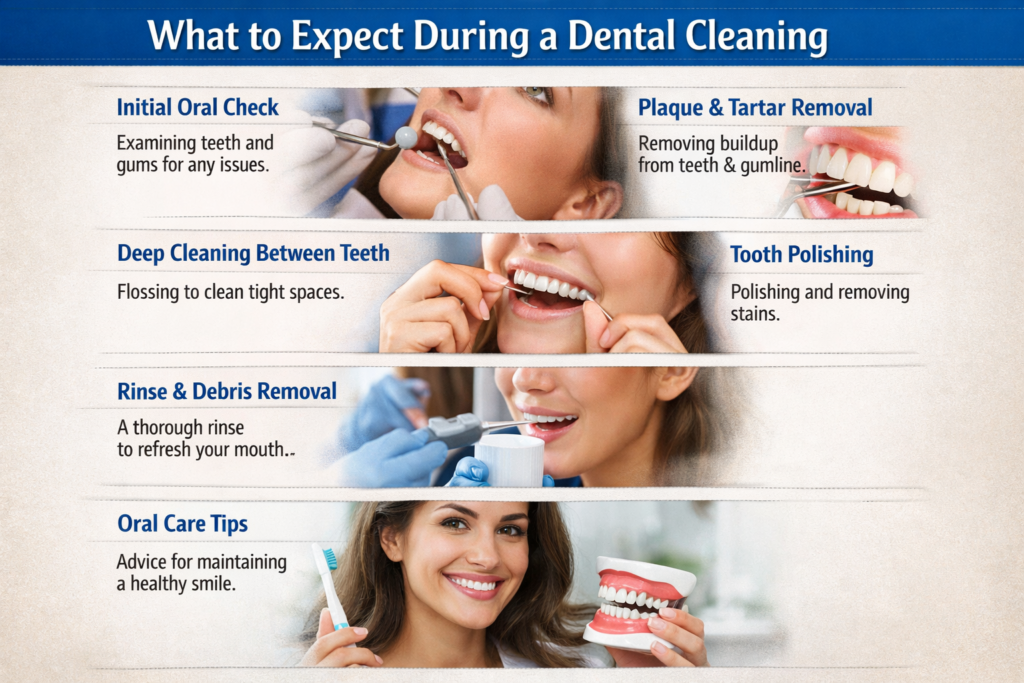
A dental cleaning is a specific, step-by-step procedure aimed at removing plaque and tartar buildup and examining your oral health. Understanding the visit can make it so much more comfortable and predictable.
- Initial Oral Check: The visit begins with a thorough examination of your teeth and gums. This allows you to spot early signs of decay, gum irritation, or other issues that may require action.
- Plaque and Tartar Removal: Specialized tools are used to clean hardened buildup from the tooth surface and along the gumline where brushing cannot fully reach.
- Deep Cleaning Between Teeth: Invest in a flosser to clean the tight spaces between teeth and keep them mess-free.
- Tooth Polishing: A polishing paste smooths the tooth surface, making it more difficult for plaque to adhere and helping to brush away stains.
- Rinse and Debris Removal: A light rinse removes loosened bits, leaving your mouth fresh and clean.
- Personalized Oral Care Tips: You may also receive basic marching orders to help you be more productive in your daily life and sustain results between visits.
Signs You Might Require A Cleanup
Your mouth sometimes provides early warning signs that should not be ignored. Awareness of these changes can help you take action before small problems become larger ones.
- Bleeding Gums During Brushing: If your gums bleed when you brush or floss, that irritation could signal early gum disease, some more serious than others, and oral hygiene problems that can be addressed.
- Persistent Bad Breath: Chronic bad breath, even after brushing, is a sign that bacteria and acumens need professional removal.
- Visible Plaque or Tartar: A yellow or rough deposit on your teeth, particularly at the gumline, is likely a hardened accumulation that isn’t possible to remove at home.
- Tooth Sensitivity: Heightened sensitivity to hot, cold, or sweet foods may indicate enamel wear or changes in the gums that warrant assessment.
- Gum Redness or Swelling: Healthy gums generally appear firm and pink. Swelling or redness indicates that your gums require attention sooner rather than later.
- Fuzzy or Coated Teeth: If your teeth don’t feel smooth even after you’ve brushed, there may be plaque buildup that needs to be scrubbed off.
Where Cleanings Fit Into Your Daily Routine
Professional cleanings are most effective when they complement what you’re already doing at home. Consider them part of a routine that helps maintain balance in your teeth and gums between visits.
- Brushing Twice a Day: Brushing regularly removes plaque daily before it has a chance to harden, keeping your teeth cleaner between appointments.
- Flossing to Reach Hidden Areas: Flossing removes food particles and bacteria from areas your toothbrush cannot reach.
- Staying Hydrated Throughout the Day: Water helps rinse away debris and aid saliva production, which naturally protects your teeth.
- Being Mindful of Food Choices: Limiting sugary snacks and acidic drinks will help prevent buildup and protect your enamel over time.
- Keeping Up with Your Schedule: There are regular appointments to address any buildup or concerns at an early stage, before they get out of hand.
- Updating Your Oral Care Tools: Replacing your toothbrush and using the right products can help improve your day-to-day routine and maintain results post-visit.

Keep Your Smile on Track with the Right Care
Keeping up with regular dental visits can do wonders for the health and appearance of your smile. Urban Dental Studio emphasizes preventive care and comprehensive cleanings to support your oral health.
If it’s been a while since you last went to the dentist, or if you have noticed changes in your teeth or gums, now is the time to call us and make an appointment. One simple step today can help you keep a healthier smile for years to come.
Questions People Ask About Dental Cleanings
If you notice bleeding gums, tooth buildup, or persistent bad breath, you may need more frequent visits. Your provider can assess your condition and recommend a schedule that supports better oral health and prevents further concerns.
Yes, brushing alone cannot remove hardened tartar. Cleanings help remove buildup in areas your toothbrush cannot reach. They also enable early detection of issues that may not be visible in your daily routine.
Yes, cleanings remove bacteria and plaque that contribute to bad breath. When combined with good oral hygiene at home, they help maintain a fresher and healthier mouth over time.
Skipping cleanings allows plaque and tartar to build up, increasing the risk of cavities and gum issues. Over time, this can lead to more complex concerns that require more extensive care.
Some people may feel mild sensitivity after a cleaning, especially if there was significant buildup. This usually fades quickly. Maintaining regular visits helps reduce sensitivity over time by preventing heavy buildup.
Most cleaning appointments take between 30 and 60 minutes. The duration depends on your oral condition and the amount of buildup present. Regular visits typically require less time compared to delayed or infrequent cleanings.
